The Gathering Room: Designing Spaces Where People Actually Want to Stay
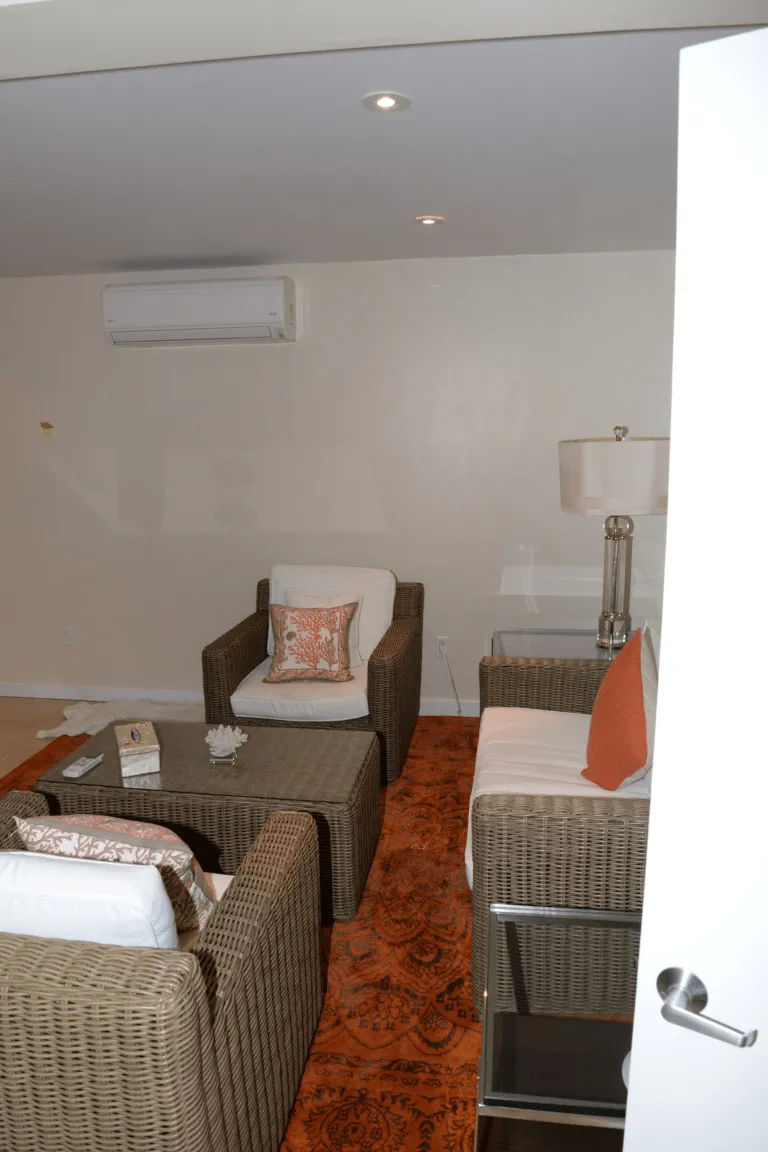
Photo: Federal Bureau of Investigation, Public domain, via Wikimedia Commons
There is a particular kind of home that photographs beautifully and feels, in person, strangely cold. The furniture is arranged with geometric precision. The throw pillows are immaculate. Every surface is styled rather than lived on. Guests arrive, admire the room, and then gradually migrate to the kitchen — where the barstools are mismatched, the lighting is imperfect, and somehow the conversation flows freely for hours.
This is not a coincidence. It is a design failure masquerading as a design success.
Across the United States, a significant number of living rooms and formal entertaining spaces have been optimized for a single audience: the camera. In an era shaped by social media aesthetics and the aspirational imagery of design platforms, the visual performance of a space has come to eclipse its actual function. And the function of a gathering space — its entire reason for existing — is to bring human beings together in a way that feels genuinely comfortable, intimate, and alive.
At Decor Design Studio, we believe this is one of the most consequential design conversations of our time. The spaces we create either facilitate connection or quietly inhibit it. The difference lies not in budget or square footage, but in a set of deliberate choices that put people before aesthetics.
Why Most Living Rooms Are Working Against You
The conventional American living room layout — sofa facing television, chairs angled toward the screen, coffee table positioned as a barrier between seating zones — was designed for passive consumption, not active conversation. When every seat in the room orients toward a screen, the implicit message to every occupant is: watch, don't talk.
Beyond furniture arrangement, the issue is often one of scale. Large sectional sofas that seat eight people in a single unbroken line are visually impressive but socially awkward. Conversation across a twelve-foot span of cushion requires effort and volume. The intimacy necessary for genuine exchange — the kind that happens naturally when two or three people sit within four to five feet of one another — simply cannot develop at that distance.
Lighting compounds the problem. Bright, uniform overhead lighting eliminates the sense of warmth and enclosure that draws people into a space and encourages them to relax. It is no accident that the most beloved bars, restaurants, and dinner parties in America share a commitment to lower, layered, and warmer light. That quality of illumination signals safety and intimacy to the human nervous system in ways that overhead fluorescents never will.
The Geometry of Good Conversation
Social scientists who study human interaction have long noted that conversation flourishes within specific physical parameters. Seating arrangements that place people at right angles or in small, enclosed groupings — rather than in parallel lines or across large distances — generate significantly more interaction and reported feelings of connection.
In practical terms, this means designing seating clusters rather than seating rows. A pair of chairs angled toward one end of a sofa, with a small round table at the center, creates a natural conversation triangle that encourages eye contact and equal participation. Multiple smaller groupings within a larger room allow different conversations to occur simultaneously — the hallmark of a genuinely successful gathering.
The coffee table, that ubiquitous centerpiece of the American living room, deserves particular reconsideration. A single large rectangular table creates a physical barrier between seating zones and discourages the kind of leaning in that signals engagement. Replacing it with two or three smaller, movable tables — ottomans, nesting tables, or low stools — gives guests surfaces within reach while preserving the physical openness that allows people to move closer together naturally.
Material Choices That Invite Rather Than Intimidate
A room that communicates "do not touch anything" is a room that fails as a gathering space. The materials chosen for a social environment should signal permission — permission to sit down fully, to set a glass on the table, to drape a jacket over the arm of a chair without anxiety.
Performance fabrics have become increasingly sophisticated and genuinely beautiful, making it possible to upholster a sofa in a rich, textured weave that withstands the realities of entertaining without sacrificing visual warmth. Natural materials — worn leather, reclaimed wood, aged brass, woven natural fibers — carry an inherent patina that communicates ease and welcome. They look better when used, not worse.
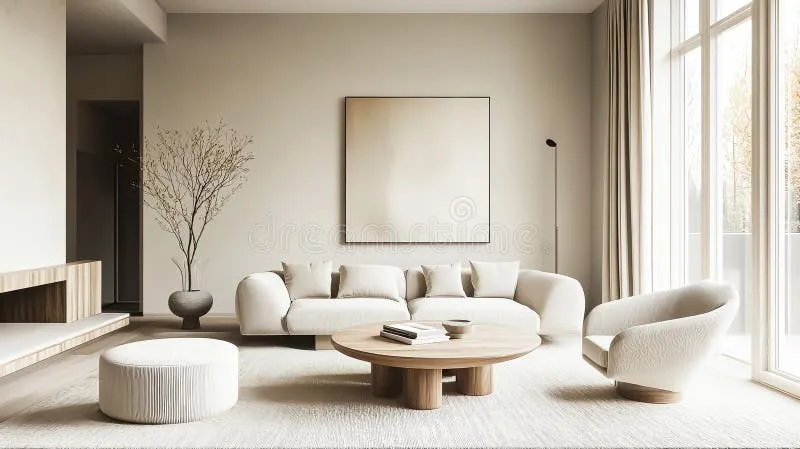
Conversely, spaces furnished with pale, delicate upholstery, glass surfaces at every turn, and pristine white walls create an atmosphere of anxious preservation. Guests sense the fragility of the environment and calibrate their behavior accordingly — sitting more carefully, speaking more quietly, leaving earlier than they might otherwise.
Lessons from Commercial Spaces That Get It Right
Some of the most instructive examples of connection-centered design are found not in residential interiors, but in the independent coffee shops, neighborhood restaurants, and community gathering spaces that have become the true living rooms of American social life.
Consider what these spaces share: varied seating options that accommodate both pairs and groups; warm, layered lighting that shifts in quality throughout the day; natural materials that develop character over time; a degree of acoustic softness that allows conversation without requiring people to shout; and a clear absence of visual perfection that makes every occupant feel equally welcome.
These are not accidental qualities. They are the result of designers and operators who have prioritized the experience of the people inside the space over the appearance of the space in isolation. Residential designers would do well to study them closely.
A Brooklyn brownstone we worked with recently applied exactly these principles to a previously underused formal sitting room. We broke the single large seating arrangement into two distinct groupings, replaced the glass coffee table with a pair of leather ottomans, added a floor lamp and two table lamps to supplement the overhead fixture, and introduced a sideboard with a drinks station that gave guests a natural reason to move through the room. Within weeks, the owners reported that the room — previously avoided — had become the default location for every gathering in their home.
Designing for Lingering
The ultimate test of a gathering space is not how it looks in the first five minutes of a party. It is whether people are still there two hours later, having forgotten to check their phones.
That quality — the quality of a room that makes time feel less urgent, that encourages people to settle rather than circulate, that generates the particular ease of genuine company — is entirely designable. It requires, above all else, a willingness to prioritize the human experience of a space over its visual performance.
This means accepting some imperfection. It means choosing materials that age gracefully over those that photograph flawlessly. It means arranging furniture for conversation rather than composition. It means lighting a room for intimacy rather than clarity.
At Decor Design Studio, we have come to regard the ability of a space to gather people — and keep them — as one of the highest measures of design success. A beautiful room that empties quickly has not done its job. A room that holds people in easy, unhurried company, long after the evening was supposed to end, has done something genuinely remarkable.
That is the room worth designing.