A Home That Grows With You: Navigating Interior Design Through Life's Major Transitions
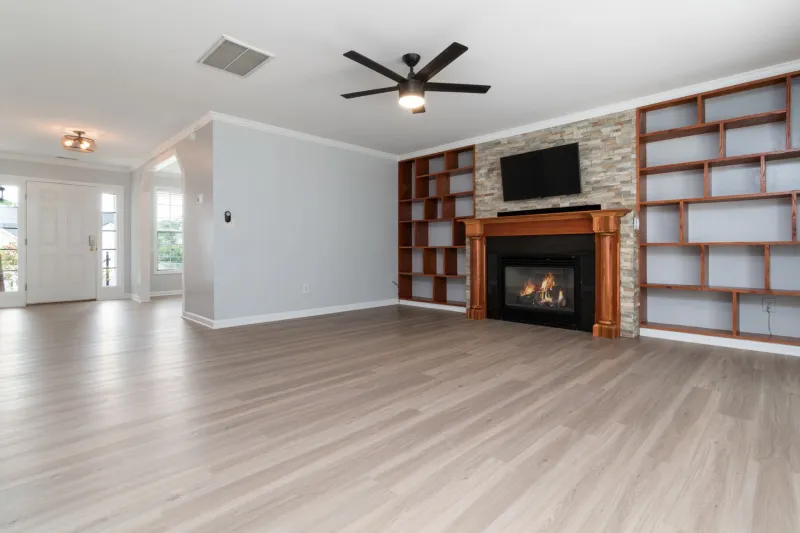
There is a particular kind of quiet discomfort that settles in when a home no longer fits the life being lived inside it. The nursery that was once a source of joy stands empty and purposeless a decade later. The formal dining room, designed for entertaining a certain social chapter, collects dust as habits shift toward casual gatherings in the kitchen. The home office, hastily assembled in a spare corner during a global disruption, has never quite been resolved into something that actually supports focused work.
This misalignment between space and life stage is extraordinarily common — and entirely understandable. Interior design, at its most intentional, is a snapshot of a particular moment: who you were, what you needed, what you could afford, and what you valued when decisions were made. Life, however, is not a snapshot. It is a continuous sequence of seasons, each with its own demands and its own beauty.
The question worth asking is not whether your home needs to change, but how to change it wisely — honoring both the investment already made and the person you are becoming.
The Myth of the Finished Home
American design culture has long promoted the idea of the "finished" home: a space that, once completed to a certain standard, remains essentially static. This is, in part, a product of how design media works. Magazine spreads and social media feeds present rooms as complete compositions, frozen at their most curated. They do not show the same room three years later, after a child was born, a parent moved in, or a career changed direction.
The most livable homes are not finished — they are responsive. They have been designed with enough structural integrity to endure and enough flexibility to adapt. Recognizing this distinction is the first and most liberating step toward a design philosophy that serves you across time rather than trapping you in a single chapter.
Identifying Your Current Season
Before making any changes, it is worth pausing to honestly assess what life season you are currently in and what that season actually requires of your home. This is not about following design trends or recreating something you admired on a renovation television program. It is about functional clarity.
Consider the following transitions and what they genuinely demand:
A new professional reality. The rise of remote and hybrid work has made the home office one of the most consequential spaces in the American household. If your current workspace is a laptop balanced on a kitchen counter or a desk wedged into a bedroom corner, this is a season that calls for a deliberate spatial intervention — not necessarily a full renovation, but a committed allocation of space, light, and acoustic privacy.
A growing family. Young children do not require a home redesigned exclusively for them, but they do require that certain zones be reconsidered with durability, safety, and flexibility in mind. This is the season to prioritize performance fabrics, easy-clean surfaces, and furniture arrangements that allow for supervised play without sacrificing the aesthetic quality of shared living spaces.
The empty nest. When children leave, an enormous amount of square footage is suddenly available for reconsideration. This is frequently one of the most creatively rich seasons for interior design — an opportunity to reclaim spaces for adult pursuits, to invest in quality over quantity, and to design for the life you actually live rather than the life that once required constant accommodation.
A significant lifestyle shift. This category is broad and deeply personal. It might mean a health change that requires accessibility modifications, a new passion that demands dedicated studio or workshop space, or simply a shift in values toward slower living and less visual noise. Each of these shifts deserves a thoughtful spatial response.
The Framework: Anchor, Adapt, Elevate
Rather than prescribing specific changes for specific circumstances, we offer a three-part framework that applies across virtually any life transition.
Anchor: Identify what is working. Before changing anything, move through your home with fresh eyes and note what genuinely serves you well. The kitchen layout that functions beautifully. The bedroom that reliably provides rest. The reading chair that has never failed to offer comfort. These anchors are worth protecting and, where possible, reinforcing. Change is most successful when it builds from a foundation of what already works.
Adapt: Address the friction points. Every home in transition has friction points — spaces or elements that actively resist the life being lived in them. A mudroom that cannot accommodate the gear of a newly active household. A dining arrangement that no longer reflects how the family actually eats. A color palette chosen for a previous aesthetic chapter that now feels misaligned with your sensibility. Adapting these friction points does not require wholesale replacement. Often, a reallocation of furniture, a change of textiles, or the addition of a single functional element resolves the tension entirely.
Elevate: Make one considered investment. Each life season presents an opportunity to make one deliberate, quality investment in your home — something that reflects your current values and will serve you for years to come. This might be a piece of furniture that anchors a newly reconfigured living room, a lighting upgrade that transforms the quality of a frequently used space, or a material change — new flooring, a tiled backsplash — that updates the character of a room without requiring structural work. The discipline here is selectivity. One meaningful investment made thoughtfully outperforms a series of incremental purchases made reactively.
On the Question of Sentimental Objects
Life transitions inevitably surface the question of what to do with objects that carry emotional weight but no longer serve a practical or aesthetic function. This is genuinely one of the more delicate dimensions of residential design, and it deserves honest engagement.
The position we hold at Decor Design Studio is neither sentimental maximalism nor ruthless minimalism. Objects that carry genuine meaning deserve to be honored — displayed with intention, stored with care, or passed along to someone for whom they will carry forward meaning. What they do not deserve is to occupy prime real estate in your home out of obligation, quietly undermining the coherence of a space that could otherwise serve you well.
The question to ask of any sentimental object is not whether it has value, but whether displaying it in this space, in this season, is the best way to honor that value. Sometimes the answer is yes. Frequently, it is not.
Design as an Ongoing Practice
The most enduring insight we can offer is this: interior design is not an event. It is a practice — one that rewards ongoing attention, periodic reassessment, and a willingness to let a space evolve as the life within it evolves.
This does not mean constant change for its own sake. It means maintaining a living awareness of whether your home is supporting or resisting the way you actually live. When the answer shifts toward resistance, that is the signal to engage — not with anxiety or expense, but with the same thoughtfulness and purpose that good design has always required.
Your home has the capacity to meet you in every season of your life. The work is in giving it the opportunity to do so.