Beyond the Visual: How Multisensory Design Creates Spaces That Truly Come Alive

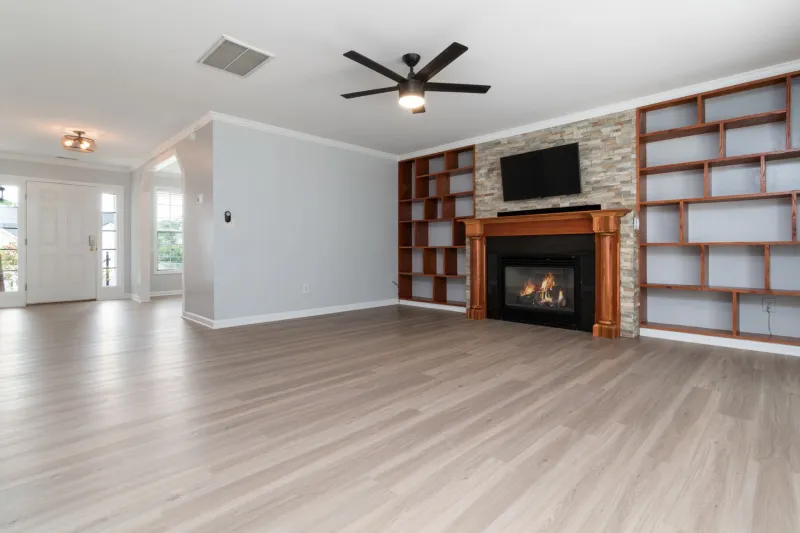
Photo: Shixart1985, CC BY 2.0, via Wikimedia Commons
For decades, interior design has been evaluated almost exclusively through photographs. A room is praised for its color palette, its furniture arrangement, the quality of light falling across a carefully chosen rug. Yet when you actually inhabit a beautifully designed space, the experience extends far beyond what your eyes register. The creak of wide-plank hardwood underfoot, the faint cedar scent drifting from a linen closet, the muffled hush that a well-placed bookcase lends to a busy corner — these are the details that transform a room from a composed image into a lived-in sanctuary.
At Decor Design Studio, we have long championed the idea that purposeful design must account for the full range of human perception. The following is a framework for thinking about — and acting upon — multisensory design in both residential and commercial environments.
Why the Five Senses Matter in Interior Design
Neuroscience offers a compelling case for multisensory environments. Research published by institutions including the Salk Institute has demonstrated that our brains process sensory input holistically; what we hear, smell, and touch profoundly influences how we perceive and remember a space. A room that smells subtly of beeswax and aged wood feels more substantial than an identical room that does not. An office where background noise is well managed feels calmer and encourages deeper concentration, regardless of how it is furnished.
For American homeowners navigating open-plan layouts, hybrid work-from-home arrangements, and increasingly compact urban dwellings, the ability to engineer sensory comfort is not a luxury — it is a practical necessity. Multisensory design is the discipline that addresses this need with both rigor and artistry.
Touch: The Foundation of Physical Comfort
Texture is perhaps the most underutilized tool in residential design. Smooth lacquered surfaces, while visually striking, communicate a kind of clinical distance. Introducing variation — a nubby wool throw, a rattan side chair, a honed limestone countertop beside polished brass hardware — creates what designers call haptic richness. This layering of tactile contrast invites the hand and, by extension, the mind to engage more fully with a room.
When selecting materials, consider what each surface will feel like at different times of day and in different seasons. A velvet sofa that feels luxurious in January may feel oppressive in July. Stone floors that are refreshing in summer can feel unwelcoming in winter without the counterbalance of layered rugs. Thoughtful material selection accounts for these seasonal shifts, ensuring that comfort remains consistent year-round.
Natural materials — solid wood, linen, leather, cork, jute — are particularly effective because they carry inherent textural variation that manufactured surfaces cannot replicate. Their imperfections are precisely what make them engaging to the touch.
Sound: The Invisible Architecture of a Room
Acoustic design is one of the most consequential and most neglected dimensions of interior planning. Hard, parallel surfaces — the hallmark of many contemporary American interiors featuring concrete floors, glass walls, and sparse furnishings — create echo and reverberation that accumulates into a low-grade auditory stress most people feel but cannot name.
Addressing sound does not require an acoustic engineer, though for large commercial projects, that expertise is invaluable. In residential settings, the following strategies yield meaningful results:
- Soft furnishings absorb sound. Upholstered seating, floor-to-ceiling drapery, and area rugs all reduce reverberation. A room furnished with substantial soft goods will feel quieter and more intimate even at the same decibel level.
- Books and art disrupt sound waves. A well-stocked bookcase or a gallery wall of framed artwork breaks up flat surfaces and scatters sound, reducing echo.
- Introduce positive sound intentionally. A small indoor fountain, a white noise machine discreetly placed, or even a curated playlist played at low volume can mask disruptive background noise and establish a consistent auditory baseline.
For open-plan spaces, partial-height partitions upholstered in fabric or covered in acoustic panels can define zones acoustically as well as visually — a strategy particularly relevant for home offices and commercial reception areas.
Scent: The Most Direct Path to Atmosphere
Of all the senses, olfaction has the most direct neurological connection to memory and emotion. A space that smells pleasant — or simply clean and neutral — is perceived as more welcoming and more carefully tended than one that does not, even when the visual presentation is identical.
Approaching scent in interior design requires restraint. Overpowering fragrances, no matter how expensive, quickly become fatiguing. The goal is not to perfume a room but to give it a gentle, consistent olfactory signature.
Natural sources are preferable to synthetic ones. Beeswax candles, cedar-lined drawers, fresh herbs placed near a kitchen window, or a bowl of dried lavender in a linen closet all contribute subtle, authentic scent without the sharp chemical edge of many commercial air fresheners. For commercial spaces — boutique hotels, retail environments, wellness studios — working with a fragrance consultant to develop a proprietary scent identity has become an increasingly common practice among discerning brands.
Ventilation is equally important. No amount of pleasant fragrance compensates for stale air. Ensuring that rooms breathe well — through operable windows, quality HVAC filtration, and the strategic placement of air-purifying plants — is the prerequisite for any intentional scent strategy.
Taste and the Designed Environment
Taste is the most situational of the senses in an interior design context, but it is not irrelevant. The spaces in which we eat and drink profoundly influence how food tastes and how much we enjoy the experience of consuming it. Research from Charles Spence at Oxford University has shown that ambient lighting, background music, and even the weight of cutlery affect perceived flavor.
In residential design, this translates to treating the dining space as a multisensory event rather than a functional necessity. Warm, dimmable lighting, a table surface with tactile interest, background music at a considered volume, and the subtle fragrance of a candle or fresh flowers all conspire to make a meal more pleasurable — without changing a single ingredient on the plate.
Sight: Returning to the Visual with Fresh Eyes
None of this is to suggest that visual design matters less. Rather, when the other four senses are addressed deliberately, the visual composition of a room takes on greater depth. Colors appear richer in a space with good acoustics and natural materials. Furniture arrangements feel more logical when they also account for how people will move through and touch the space.
Natural light remains the single most powerful visual tool available to any designer. Prioritizing it — through window placement, reflective surfaces, and the avoidance of heavy window treatments that block it unnecessarily — elevates every other sensory element in the room.
Bringing It All Together
Multisensory design is not a checklist. It is a discipline of attention — a commitment to asking, at every stage of a project, how this space will feel to inhabit rather than simply how it will look in a photograph. At Decor Design Studio, we encourage clients to move through their spaces slowly, with deliberate awareness, noting what sounds they hear, what surfaces they reach for, what scents greet them at the threshold.
The answers to those questions are the raw material of truly transformative design. A space that engages all five senses does not merely look beautiful. It feels, sounds, and breathes beautifully — and that is a distinction your guests, your clients, and above all, yourself will notice every single day.