Living by Design: How Intentional Room Planning Can Elevate Your Daily Life

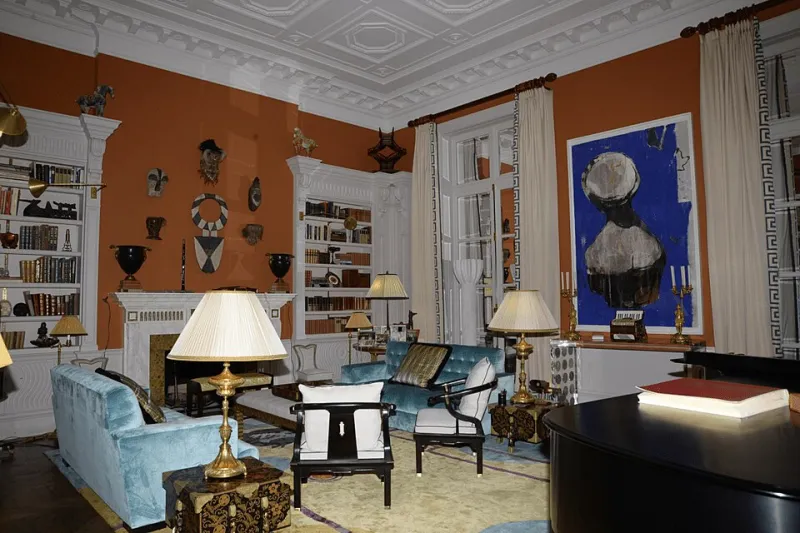
Photo: Dietmar Rabich, CC BY-SA 4.0, via Wikimedia Commons
There is a quiet revolution happening inside American homes. It is not driven by a single trend or a particular palette — it is driven by a question that more homeowners are beginning to ask before they purchase a single piece of furniture: How do I actually live in this room?
At Decor Design Studio, we believe that the most enduring interiors are those built not merely around a visual concept, but around the specific rhythms and needs of the people who inhabit them. Purposeful design — the kind that accounts for morning routines, creative work, family rituals, and restorative rest — produces spaces that feel both personally resonant and genuinely functional.
The Difference Between a Beautiful Room and a Room That Works
A room can be photographed beautifully and still feel wrong to live in. Furniture arranged for visual symmetry may interrupt natural traffic flow. A home office styled for Instagram may lack the acoustic privacy necessary for focused work. A bedroom curated for elegance may inadvertently undermine sleep through poor lighting choices or cluttered surfaces that signal unfinished business.
The distinction between a room that looks purposeful and one that is purposeful lies in the design process itself. Intentional design begins with observation and honest self-assessment rather than inspiration boards. It asks: What time of day do you use this room most? What activities take place here? What emotional state do you wish to inhabit when you enter?
These are not merely practical questions — they are the foundation of spaces that support well-being.
Case Study: The Home Office Designed for Deep Focus
Consider a scenario familiar to many American professionals: a spare bedroom hastily converted into a home office during the pandemic years, never truly optimized for sustained productivity. A desk pushed against a wall, overhead lighting that creates glare, and storage solutions that were never quite adequate.
When approached with intentionality, this same room can be transformed. Orienting the desk to face a window — rather than a wall — introduces natural light and a visual anchor point that reduces eye strain. Built-in shelving eliminates visual noise by giving every item a designated place. Acoustic panels, integrated discreetly behind artwork or upholstered wall sections, address sound bleed from adjacent rooms. A dedicated task lamp with adjustable color temperature supports the shift from morning productivity sessions to late-afternoon creative work.
The result is not a room that simply contains a desk. It is a room engineered for concentration, one whose every design decision reinforces a single behavioral goal: the ability to do meaningful work.
Case Study: A Kitchen Built Around Connection
The American kitchen has long been understood as the social heart of the home, yet many kitchens are designed in ways that inadvertently isolate the cook from the rest of the household. A galley layout with the range positioned against a far wall, for instance, places the person preparing a meal with their back to the room — a subtle but real disruption to family interaction.
Redesigning a kitchen around connection might involve repositioning an island to create a natural gathering point, selecting counter-height seating that encourages children to sit nearby during meal preparation, or choosing open shelving that makes the kitchen's contents visible and accessible to all family members rather than hidden behind cabinet doors. Lighting becomes a social tool as well — a dimmer-controlled pendant over the island shifts the atmosphere from task-oriented to convivial as the evening progresses.
These choices do not sacrifice beauty. They redirect it. The kitchen becomes not only a room to admire but a room that actively draws people together.
Case Study: The Bedroom as a Sanctuary for Rest
Few rooms carry as much consequence for well-being as the bedroom, and yet few are designed with the specific requirements of sleep in mind. In many American homes, the bedroom doubles as an entertainment space, a home office overflow, and a storage solution — roles that are fundamentally at odds with the psychological conditions that promote restorative sleep.
An intentional bedroom design begins by editing ruthlessly. Screens and work materials are removed or concealed. Blackout window treatments are selected not as an afterthought but as a primary design element. The color palette leans toward muted, low-saturation tones — warm grays, soft sage, dusty terracotta — that have been shown to promote psychological calm. Bedside lighting is positioned to facilitate reading without flooding the room, and textiles are chosen as much for tactile comfort as for visual appeal.
The cumulative effect of these decisions is a room that communicates, from the moment you enter, that rest is the priority here.
How to Begin Your Own Purposeful Redesign
The principles of intentional design are accessible to any homeowner willing to approach their space with honest curiosity. Begin by spending one full week observing how you actually use each room — not how you imagine you use it, but how you truly do. Note where clutter accumulates, which areas feel energizing, and which feel subtly draining.
From those observations, identify the single most important function of each room. Then audit your existing furnishings and design choices against that function. Ask whether each element supports or undermines the room's primary purpose.
Finally, make changes incrementally and observe their effects. Purpose-driven design is not a one-time renovation project — it is an ongoing conversation between the people who live in a home and the space that shelters them.
Beauty That Earns Its Place
At Decor Design Studio, our guiding conviction is that beauty and function are not opposing forces to be balanced against each other — they are complementary qualities that, when unified through thoughtful design, produce something greater than either could achieve alone. A room that supports how you live is, by definition, a room that is beautiful in the fullest sense of the word.
The most compelling interiors we encounter are never those that simply impress upon entry. They are the ones that, after months of daily use, continue to feel right — rooms where the light falls where you need it, where movement flows naturally, and where the design, quietly and consistently, makes life a little better.