The Collected Home: A Guide to Blending Vintage Finds, Artisan Pieces, and Contemporary Design
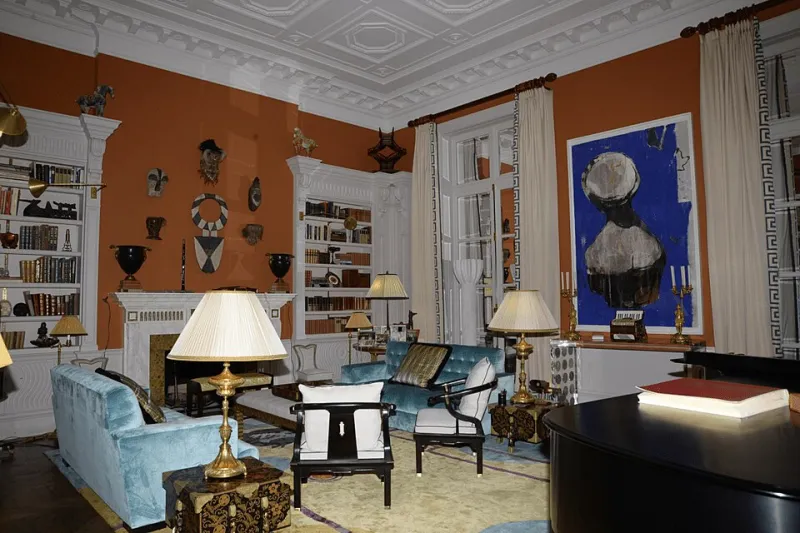
Photo: Federal Bureau of Investigation, Public domain, via Wikimedia Commons
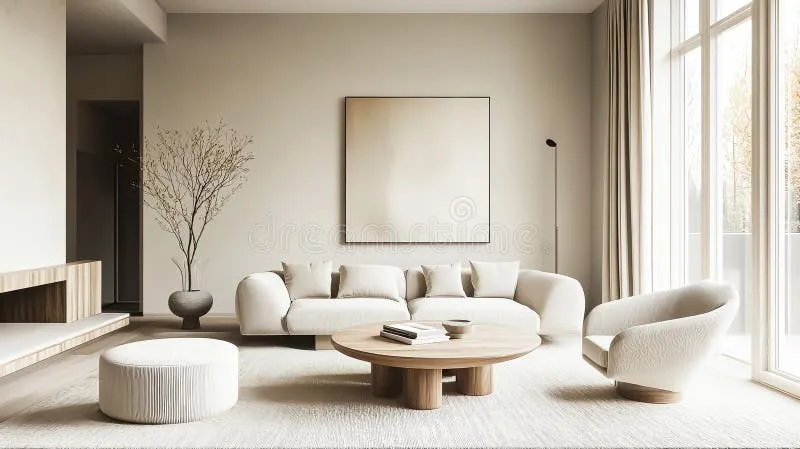
Walk through the most admired homes in America today, and you will notice something that sets them apart from the showroom-perfect interiors of previous decades: they look lived in, but in the most elevated sense of the phrase. A mid-century credenza sits beneath a large-format contemporary painting. A hand-thrown ceramic vase rests on a sleek marble console. A Victorian side chair, reupholstered in a current textile, occupies a corner of an otherwise thoroughly modern living room.
This is the collected home — and it is one of the most significant shifts in American interior design sensibility in a generation.
Why the Matched Set Has Lost Its Appeal
For much of the twentieth century, the aspirational American interior was defined by coordination. Furniture suites, matched bedroom sets, and cohesive catalog purchases signaled prosperity and good taste. Today, that aesthetic reads as impersonal — the visual equivalent of a hotel lobby rather than a home.
The shift reflects a broader cultural reorientation. American consumers have grown increasingly skeptical of mass production and increasingly drawn to objects with provenance, craft, and individuality. The rise of estate sales, vintage marketplaces, and platforms connecting buyers directly with independent makers has made it easier than ever to build an interior from singular, meaningful pieces rather than uniform collections.
The challenge — and the art — lies in making these disparate elements cohere.
The Principle of Visual Dialogue
The most successful mixed-era interiors do not simply place objects from different periods in proximity to one another. They create what designers often describe as visual dialogue — a conversation between pieces that highlights their differences while revealing unexpected common ground.
Consider how this might work in practice. A 1960s Scandinavian teak dining table, with its warm wood tones and clean horizontal lines, might be paired with contemporary chairs in a natural linen — a pairing that honors the table's mid-century character while grounding it in a current material sensibility. A hand-woven textile from a contemporary American artisan, hung on the wall above, introduces texture and handcraft that bridges the human quality of both the vintage and the modern.
The dialogue here is not accidental. It is constructed through deliberate attention to the visual properties — color, material, scale, and line — that allow different pieces to speak to one another across decades.
Anchoring the Mix: The Role of a Unifying Thread
One of the most common concerns among homeowners attempting an eclectic interior is the fear that the result will feel chaotic or incoherent. The remedy is not to reduce variety but to establish a unifying thread — a consistent element that runs through the room and provides visual stability.
This thread might be material: a commitment to natural fibers and organic textures that appears in every upholstered surface, regardless of the piece's era. It might be tonal: a palette of warm neutrals and deep earthy accents that recurs across objects of varying provenance. Or it might be a quality of craftsmanship — a preference for hand-finished, artisan-made objects that gives the room a consistent sense of human presence regardless of when each piece was made.
At Decor Design Studio, we often advise clients to identify their unifying thread before they begin acquiring pieces, not after. This does not constrain the collection — it gives it coherence.
Sourcing with Intention: Where to Find Pieces Worth Keeping
Building a collected home is, at its heart, a practice of discernment. Not every vintage piece or artisan find belongs in every home, and the ability to edit — to recognize what serves the interior and what merely adds to it — is as important as the ability to discover.
For vintage and antique pieces, estate sales remain one of the richest sources in the United States, offering objects with genuine history at prices that reflect their secondary market status. Regional auction houses, particularly those outside major metropolitan areas, frequently surface exceptional pieces that have not yet attracted the attention of coastal dealers. Flea markets and antique centers, when approached with patience and a clear sense of what you are seeking, can yield remarkable finds.
For artisan and craft-based pieces, the American studio craft movement has produced an extraordinary range of ceramicists, weavers, woodworkers, and metalworkers whose work is available directly through their own studios, craft fairs, and platforms such as American Craft Council member marketplaces. Purchasing directly from makers not only ensures authenticity but establishes a relationship with the object's origin — a quality that enriches the interior with meaning as well as beauty.
Contemporary design studios and independent furniture makers round out the mix, offering pieces that speak to current aesthetic sensibilities while maintaining the quality and individuality that distinguish them from mass-market alternatives.
Editing the Collection: When to Say No
The discipline of the collected home lies not in accumulation but in curation. Every interior has a carrying capacity — a point at which additional objects begin to compete with one another rather than converse. Learning to recognize that threshold, and to resist the acquisition of pieces that cross it, is one of the most valuable skills a homeowner can develop.
A useful editing question: Does this piece add something the room currently lacks — a material quality, a historical note, a visual weight — or does it simply repeat what is already present? If the answer is the latter, the piece may be beautiful in isolation without belonging in this particular interior.
It is also worth revisiting an assembled collection periodically. As a home evolves and as your own aesthetic sensibility matures, pieces that once felt essential may come to feel redundant or misaligned. The collected home is not a static achievement — it is a living practice of refinement.
The Personal Interior as the Ultimate Design Statement
What distinguishes the truly collected home from the merely eclectic one is the presence of a coherent personal vision. The pieces may span centuries and continents, but they reflect a consistent set of values: an appreciation for craft, a respect for history, a preference for materials that age with grace, and a commitment to beauty that is earned rather than purchased wholesale.
In a design landscape saturated with fast furniture and algorithmic trend cycles, the collected home stands as a quiet act of resistance — and, ultimately, as one of the most enduring expressions of personal style available to the American homeowner.