Light as Language: How Strategic Illumination Defines the Way We Live, Work, and Connect
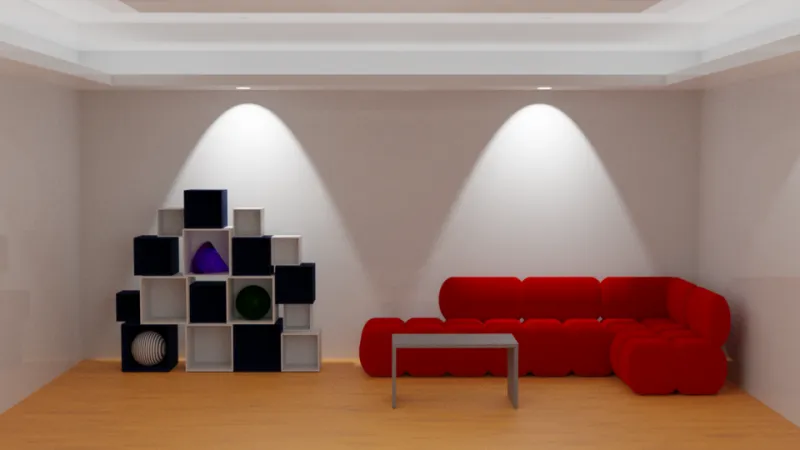
Photo: Stilfehler, CC BY-SA 4.0, via Wikimedia Commons
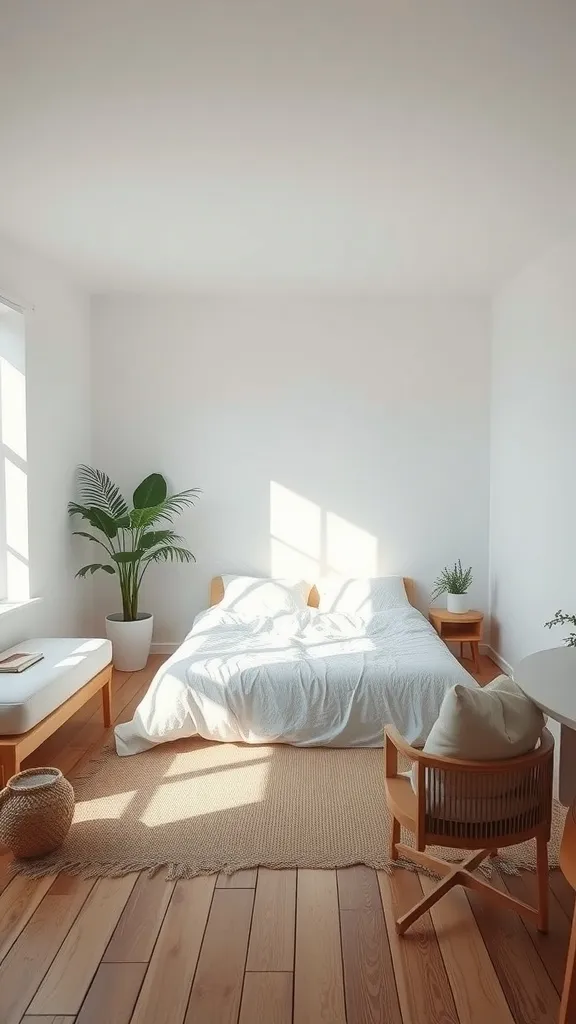
Walk into a room bathed in harsh overhead fluorescence, and something shifts — imperceptibly at first, then undeniably. Shoulders tighten. Conversation flattens. The space, regardless of how beautifully it may be furnished, feels clinical, even hostile. Now imagine that same room rewired with layered, warm illumination: a floor lamp casting a soft amber glow in one corner, recessed fixtures dimmed to a comfortable threshold, a pendant light drawing attention to a carefully arranged dining table. The furniture hasn't changed. The walls remain the same color. Yet the room has become entirely different.
This is the power of lighting design — and it remains one of the most misunderstood disciplines in American interiors.
The Biology Behind the Bulb
Before exploring aesthetics, it is worth understanding what light does to the human body at a biological level. The human circadian system — the internal clock that governs sleep, alertness, hormone production, and mood — is exquisitely sensitive to light. Specifically, it responds to color temperature, measured in Kelvins, and to intensity.
Cool, blue-toned light (above 5000K) signals the brain to suppress melatonin and elevate cortisol, promoting wakefulness and cognitive sharpness. Warm, amber-toned light (below 3000K) does the opposite, easing the body toward relaxation and, eventually, sleep. The implications for interior design are profound. A home office illuminated with warm Edison-style bulbs may be charming, but it is working against the very alertness its occupant requires. Conversely, a bedroom outfitted with bright, cool-toned recessed lighting is quietly undermining the quality of its occupant's rest — night after night.
Many Americans live and work in spaces where lighting was selected for cost or convenience rather than biological compatibility. The result is a widespread, low-grade disruption of wellbeing that most people never trace back to its source.
The Three Layers Every Space Needs
Professional lighting designers operate with a foundational framework: ambient, task, and accent illumination. Each serves a distinct purpose, and the absence of any one layer leaves a space functionally or emotionally incomplete.
Ambient lighting establishes the overall luminosity of a room. It is the baseline from which everything else is built — typically achieved through ceiling-mounted fixtures, recessed downlights, or indirect cove lighting that bounces illumination off walls and ceilings.
Task lighting directs focused light where specific activities demand it: reading lamps beside armchairs, under-cabinet strips in kitchen workspaces, adjustable desk lamps in home offices. Without dedicated task lighting, occupants unconsciously strain — a fatigue that accumulates over hours and days.
Accent lighting is the layer most often sacrificed in budget-conscious renovations, yet it contributes disproportionately to a space's visual richness. Picture lights above artwork, directional spotlights highlighting architectural details, or LED strips tucked beneath floating shelving — these elements introduce depth, shadow, and drama that transform a flat room into a composed, intentional environment.
The most sophisticated residential and commercial interiors deploy all three layers simultaneously, with dimmer controls that allow the balance to shift according to the time of day or the nature of the activity taking place.
Lighting and Human Behavior: The Social Dimension
Beyond biology, lighting exerts a measurable influence on how people interact with one another. Research in environmental psychology consistently demonstrates that lower light levels reduce social inhibition — people speak more openly, linger longer at the table, and report feeling more at ease. This is not accidental. It is precisely why fine dining establishments invest so deliberately in candlelight and carefully dimmed sconces. The lighting is doing social work.
In contrast, brightly lit environments tend to encourage efficiency and brevity. Retail spaces, hospitals, and fast-food restaurants all exploit this principle, whether consciously or not. For homeowners who wish to cultivate a dining room that invites genuine conversation rather than perfunctory meals, or a living room that encourages guests to settle in rather than make polite excuses to leave, lighting calibration is as important as furniture arrangement.
Pendant fixtures positioned low over dining tables create an intimate pool of light that draws a group inward. Sconces flanking a sofa create a sense of enclosure and warmth. A brightly lit entry hall communicates welcome and clarity. Each choice sends a social signal before a single word is spoken.
Common Mistakes in American Homes
Despite its importance, lighting design is routinely underestimated during home construction and renovation. Several patterns appear with particular frequency in American residential spaces.
The first is the single-source ceiling fixture — a lone overhead light that casts flat, unflattering illumination across an entire room. This approach treats lighting as a checkbox rather than a design element, and it produces spaces that feel institutional regardless of how thoughtfully they are otherwise decorated.
The second is the failure to layer. Many homeowners invest in beautiful ambient fixtures while neglecting task and accent lighting entirely. The result is a room that looks finished in a showroom photograph but feels incomplete and slightly uncomfortable to actually inhabit.
The third is color temperature inconsistency. Mixing warm and cool bulbs across a single space creates visual dissonance that most people cannot identify but everyone feels. Maintaining a consistent color temperature throughout a room — or deliberately transitioning between zones in a deliberate, graduated way — is a hallmark of professional lighting practice.
Practical Strategies for Immediate Impact
For those ready to reassess their spaces, several approaches yield significant results without requiring a full renovation.
Installing dimmer switches on existing fixtures is among the highest-value, lowest-cost interventions available. The ability to modulate intensity according to the time of day or the desired atmosphere transforms a static lighting scheme into a dynamic, responsive one.
Replacing overhead bulbs with warmer alternatives (2700K to 3000K) in bedrooms, dining rooms, and living spaces immediately shifts the emotional register of those rooms toward comfort and ease.
Adding a single floor lamp or table lamp to a room dominated by overhead lighting introduces the layering that distinguishes designed spaces from merely lit ones.
For those undertaking more substantial projects, consulting with a lighting designer early in the process — before walls are closed and fixtures are selected — is an investment that pays dividends for the life of the space. At Decor Design Studio, we approach lighting not as a specification to be completed but as a language to be spoken fluently, one that tells the story of how a space is meant to be experienced.
The Standard Worth Holding
Lighting design, at its finest, disappears. It does not announce itself. It simply makes everything else in the room look better, feel more intentional, and function more gracefully. It governs the body's rhythms, shapes social dynamics, and communicates a space's purpose before a single piece of furniture is noticed.
The spaces that endure — the ones people return to, linger in, and remember — are almost always spaces where light has been considered with the same rigor as any other design element. That standard is not reserved for luxury projects or commercial installations. It belongs in every home, in every room, where people deserve to feel their best.