Behind Every Great Kitchen, a Second One: The Quiet Return of the Scullery and Butler's Pantry
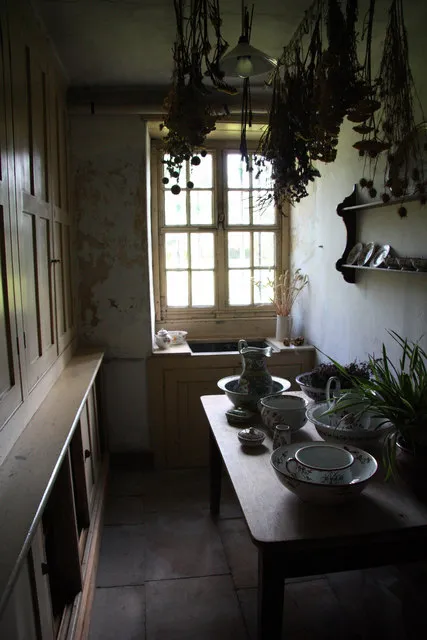
Photo: Richard Croft, CC BY-SA 2.0, via Wikimedia Commons
Walk through enough newly built or recently renovated homes across the United States and you will notice something curious: the kitchens keep multiplying. Behind a discreet door beside the range, or down a short passage from the main cooking space, a second room hums with quiet industry — a dishwasher mid-cycle, a coffee station fully stocked, catering trays staged for tomorrow evening's dinner party.
The secondary kitchen, long relegated to Gilded Age mansions and English country houses, has returned to the American floor plan with genuine conviction. Understanding why — and whether one belongs in your home — requires a brief look backward and a clear-eyed look at how we actually live now.
A Room with a Long Memory
The scullery is hardly a new idea. In nineteenth-century American homes of means, the scullery handled the dirty work: scrubbing pots, processing vegetables, keeping the mess of cooking at a firm remove from any space a guest might see. The butler's pantry served a different master — literally — functioning as a staging ground for silver, china, and the choreography of formal service.
The open-concept revolution of the 1980s and 1990s erased these rooms, collapsing walls in favor of one great, sociable kitchen. But openness came at a cost. Anyone who has hosted Thanksgiving in an open-plan home knows the particular indignity of guests watching the dirty dishes accumulate in real time.
Why the Second Kitchen Is Back
Three forces are converging to bring these rooms back.
The entertainment factor. Americans are entertaining at home again, and the desire to present a composed kitchen while the real work happens elsewhere has enormous appeal. A butler's pantry lets the bar, the appetizers, and the good china live apart from the chaos.
The appliance problem. Today's kitchens carry more equipment than ever — air fryers, espresso machines, stand mixers, instant everything. A back kitchen gives these workhorses a home without turning the primary kitchen into a showroom for countertop clutter.
Resale reality. Real estate professionals in markets from Dallas to Denver report that a well-executed butler's pantry photographs beautifully and differentiates a listing. While no appraiser will assign it a line item, buyers consistently respond to the perceived luxury of a hidden working room.
Which Room Is Which?
The terminology gets muddled, so a quick field guide:
- Butler's pantry: A transition space between kitchen and dining room, focused on storage, staging, and service. Think cabinetry for china, a beverage station, and generous counter space for plating.
- Scullery: A true working room for cleanup and prep — second sink, second dishwasher, open shelving for the ugly-but-necessary pots.
- Back kitchen: The full-service option: a secondary cooking zone with its own cooktop or range, ideal for households that cook heavily, preserve, or entertain at scale.
Does Your Home Need One?
Honesty matters here. A second kitchen makes the most sense when at least one of the following is true: you entertain more than a handful of times a year; your household cooks from scratch daily and the mess is a genuine friction point; you have an underused adjacent room, pantry, or large closet that can be converted; or you are planning a major kitchen renovation anyway and can capture economies of scale.
Conversely, if your kitchen functions well and your entertaining style leans casual, the square footage may serve you better as a walk-in pantry or a mudroom. Design should follow life, not the other way around.
Designing a Second Space That Works
The best secondary kitchens are unapologetically utilitarian in function and quietly beautiful in form.
Plan the plumbing first. A second sink and dishwasher drive the budget. Locating the secondary space adjacent to — or back-to-back with — the primary kitchen's wet wall keeps costs contained.
Choose durable finishes. This is the room for quartz or butcher block counters, glazed or unlacquered cabinetry, and flooring that forgives a dropped cast-iron skillet. Reserve the marble and the brass for the room guests will see.
Light it in layers. Task lighting over the sink and counters, plus ambient light on dimmers, makes the room work equally well at 6 a.m. meal prep and 9 p.m. cleanup.
Give it a door. The entire point is separation. A pocket door or a glazed double door preserves the option of hiding the room completely — or showing it off as a jewel box when the mood strikes.
Style it deliberately. Open shelving with your everyday stoneware, a wallpapered ceiling, a runner that can take a beating. A working room with charm is a daily pleasure, not an apology.
The Larger Lesson
The resurgence of the scullery and butler's pantry reflects a maturing understanding of what kitchens are: not a single stage set, but a system of spaces with different jobs. Some rooms perform for an audience; others do the work that makes the performance possible.
Designing for both — the beautiful and the functional, the seen and the unseen — has always been the essence of a well-made home. The second kitchen is simply the latest, and most welcome, expression of that old idea.