The Architecture of Silence: How Acoustic Design Shapes the Way Your Home Feels
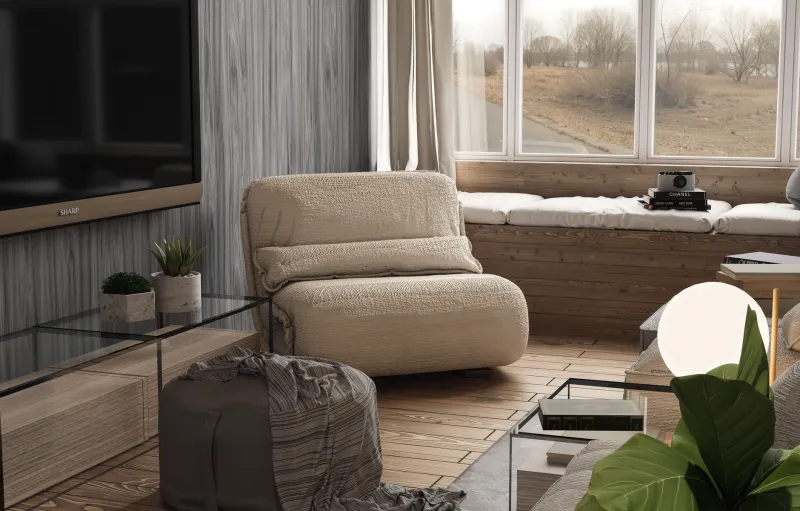
There is a particular quality to entering a beautifully designed room and immediately feeling at ease—a sense of calm that seems to arrive before you've fully registered the furniture arrangement or the carefully chosen palette on the walls. More often than not, that sensation has less to do with what you see and far more to do with what you hear, or rather, what you don't. Sound is the invisible architecture of a home, and its design deserves the same deliberate attention we give to every visible surface.
At Decor Design Studio, we have long understood that a space's emotional resonance is inseparable from its acoustic character. As open-plan living has dominated American residential design for the past two decades, the unintended consequence has been homes that echo, reverberate, and accumulate noise in ways that quietly erode comfort and concentration. Addressing this dimension of interior design is not merely a technical exercise—it is an act of genuine care for the people who inhabit a space.
Why Sound Matters More Than You Think
Human beings are extraordinarily sensitive to their acoustic environments, even when they cannot consciously identify what is bothering them. Research in environmental psychology consistently demonstrates that excessive background noise elevates cortisol levels, impairs cognitive performance, and disrupts sleep quality. Conversely, spaces that absorb sound appropriately—reducing harsh reflections without creating an unsettling, anechoic deadness—measurably lower stress and improve focus.
In a typical American home, hard surfaces are everywhere: polished hardwood floors, tile, glass windows, drywall, and granite countertops. Each of these materials reflects sound waves rather than absorbing them, creating what acousticians call a high reverberation time. The result is a room in which sound bounces repeatedly before dissipating, producing a muddiness that makes conversation feel effortful and ambient noise feel intrusive. The problem is compounded in open-plan kitchens and living areas, where sound travels freely without the natural dampening effect of walls and doors.
The Materials That Shape Your Soundscape
Acoustic design begins with an honest assessment of the materials already present in a space. Every surface in a room has what designers call an absorption coefficient—a measure of how much sound energy it captures versus reflects. Dense, soft materials absorb sound effectively; hard, smooth surfaces do not.
Textiles are among the most powerful acoustic tools available to a homeowner. A generously sized area rug in a room with hardwood floors can reduce reverberation time dramatically, transforming a space that previously felt harsh into one that feels settled and intimate. Layered window treatments—particularly heavy linen or velvet drapery panels that extend from ceiling to floor—serve double duty, softening both light and sound simultaneously. Upholstered furniture, especially pieces with deep cushioning and fabric-wrapped frames, contributes meaningfully to a room's acoustic comfort.
Beyond textiles, the strategic introduction of soft architectural elements offers more permanent solutions. Acoustic ceiling tiles have evolved far beyond their utilitarian origins and are now available in forms that complement sophisticated residential interiors. Bookshelves lined with books function as surprisingly effective diffusers, scattering sound waves and breaking up the flat, reflective surfaces that cause echo. Artwork mounted on walls, particularly canvas pieces or works under glass with a slight air gap, contributes a modest but measurable degree of absorption.
Spatial Planning as Acoustic Strategy
The arrangement of furniture and the configuration of rooms are not merely visual decisions—they are acoustic ones as well. A seating arrangement that draws chairs and sofas toward the center of a room, away from bare walls, inherently reduces the likelihood of sound reflecting directly between hard parallel surfaces. This principle, known in acoustics as breaking up flutter echo, is one of the simplest adjustments a homeowner can make.
Room proportions also matter considerably. Long, narrow rooms with parallel walls are acoustically challenging because sound waves bounce back and forth in predictable, reinforcing patterns. Introducing angled elements—a bookshelf placed at a slight diagonal, a room divider that interrupts a straight wall line, or even a large piece of art positioned asymmetrically—disrupts these patterns and reduces the buildup of resonant frequencies.
For homeowners undertaking renovation or construction, acoustic insulation between floors and within walls represents one of the most impactful investments available. Mass-loaded vinyl, resilient channel framing, and acoustic-grade insulation batts are professional-grade solutions that significantly reduce the transmission of both impact noise—footsteps, dropped objects—and airborne sound between rooms. In multi-story homes or urban apartments where neighbor noise is a concern, these interventions can transform the character of a space entirely.
Designing for Specific Acoustic Needs
Different rooms within a home have distinct acoustic requirements, and thoughtful design accounts for this variation rather than applying a single approach throughout.
Home offices have become a permanent fixture in American residential life, and they present particular acoustic challenges. Productivity research is clear: background noise and conversational distraction are among the most significant impediments to focused cognitive work. A dedicated home office benefits enormously from acoustic panels—which are now produced in forms that resemble framed artwork or decorative wall installations—combined with a substantial area rug and full-length curtains. For those engaged in video conferencing, reducing echo within the room is equally important; a space that sounds clear and controlled communicates professionalism as much as any visual backdrop.
Bedrooms, by contrast, call for a different acoustic priority: the attenuation of external noise and the creation of an environment that supports deep rest. Blackout curtains with acoustic lining, soft wall treatments, and upholstered headboards all contribute to this goal. The placement of a bedroom relative to street noise, HVAC systems, and plumbing runs is also worth considering during any renovation—these structural decisions, made early, have lasting consequences for sleep quality.
Living and dining areas benefit from what acousticians describe as a balanced soundscape: enough absorption to prevent harshness during conversation, but sufficient liveliness to feel warm and socially engaging. Completely deadening these spaces creates an unnatural quiet that can feel uncomfortable during gatherings. The goal is calibration, not elimination.
The Aesthetic Opportunity in Acoustic Design
Perhaps the most compelling argument for attending to a home's acoustic character is that the solutions are rarely in conflict with beauty—they are, more often than not, expressions of it. The layered textiles, the generous upholstery, the book-lined walls, the floor-to-ceiling drapery: these are the hallmarks of interiors that feel genuinely considered and deeply livable. Acoustic attentiveness and aesthetic refinement are not competing priorities; they are complementary ones.
At Decor Design Studio, we approach sound as we approach light—as a fundamental material of interior design, one that shapes experience as profoundly as any furniture selection or color choice. A home that has been designed with acoustic intention does not merely look beautiful. It feels quiet in the truest sense of the word: not silent, but composed. Settled. Entirely itself.
For homeowners ready to move beyond the visible dimensions of their spaces, the soundscape is the next frontier—and its rewards are felt in every quiet moment a home makes possible.

